
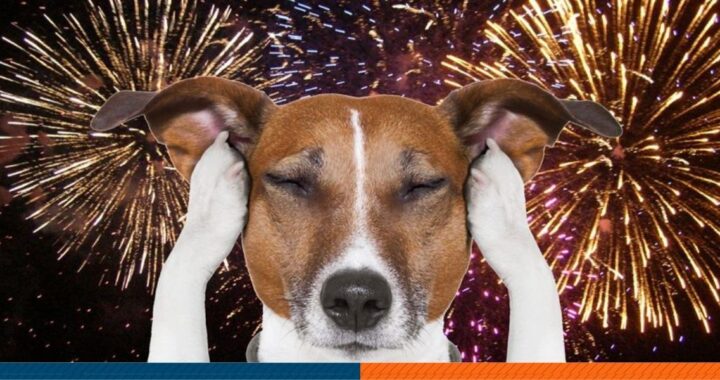
The 4th of July is over. The cookouts were great, the fireworks were impressive, and now you’re sitting here Googling “why is my dog still acting weird” three days later.
You’re not imagining it. And you’re definitely not alone.
A lot of dog owners expect their pets to snap back to normal the morning after fireworks. Some do. But plenty of dogs carry the stress of the holiday for days, sometimes longer, especially if they were already on the anxious side to begin with. The noise, the flashes, the unpredictability of it all, it’s genuinely overwhelming for a dog’s nervous system. And just because the bangs have stopped doesn’t mean your dog’s body knows that yet.
Here’s what’s actually going on and what you can do about it.
Why your dog is still stressed even though it’s over
Dogs don’t process stressful events the way we do. We know the fireworks were on one night, they’re done, life is back to normal. Your dog doesn’t have that context. What they experienced was loud, unpredictable, and terrifying, and their nervous system responded accordingly.
After a significant stress event, cortisol (the stress hormone) can stay elevated in a dog’s body for days. During that window, your dog may seem more reactive than usual, more clingy, more restless, or strangely more withdrawn. Some dogs go off their food. Some have trouble settling at night. Some become jumpy at sounds they normally ignore.
None of this means something is permanently wrong. It means your dog is still coming down, and they need some help getting there.
What to watch for in the days after
Every dog is different, but here are the most common signs that your dog is still carrying post-fireworks stress:
Restlessness and pacing. Your dog can’t seem to settle anywhere, keeps moving from room to room, or circles before lying down more than usual.
Clinginess or, on the flip side, hiding. Some dogs want to be on top of you constantly. Others want to be under the bed and left alone. Both are valid stress responses.
Appetite changes. Skipping a meal or two after a stressful event is normal. More than two days of disinterest in food is worth paying attention to.
Heightened reactivity. Your normally chill dog barks at the mailman, startles at a car door, or overreacts to things they’d usually brush off. Elevated cortisol makes everything feel more threatening.
Excessive yawning, lip licking, or panting. These are calming signals, your dog’s way of trying to self-soothe. If you’re seeing a lot of them, your dog is telling you they’re not okay yet.
Accidents inside. Stress affects digestion and bladder control. If your house-trained dog has had an accident since the holiday, stress is likely the reason.
What actually helps
Give them a few low-key days
This one sounds obvious but it’s easy to underestimate. Skip the busy dog park this week. Skip the loud family gathering. Give your dog permission to just be home, in their safe space, with you nearby. The goal is to let their nervous system downregulate without adding new stimulation on top of it.
Easy walks in quiet places are great. Not because exercise isn’t important, but because a trail with less traffic and fewer surprises is genuinely calming. Let them sniff. Sniffing is one of the most effective natural stress-relief tools a dog has.
Stick to routine
If the holiday weekend threw off your dog’s schedule (feeding times, walk times, bedtime), get back to the normal rhythm as quickly as you can. Dogs are creatures of routine and predictability. A consistent schedule signals safety in a way that nothing else really does.
Don’t accidentally reinforce the anxiety
This is the tricky one. When your dog is scared or stressed, every instinct you have is to comfort them. Picking them up, talking to them in a high-pitched voice, constantly reassuring them. It feels like the right thing to do.
The problem is that from your dog’s perspective, your anxious energy confirms that there is something to worry about. You don’t have to ignore your dog, but calm, neutral energy is actually more comforting than dramatic reassurance. Act like everything is fine, because it is, and let your presence be the signal that the world is safe again.
Try a sniff-based activity or food puzzle
Mental engagement that’s calm and rewarding helps shift a dog out of the stress response. A Kong filled with frozen peanut butter, a snuffle mat, a simple nose work activity where they search for hidden treats around the house. These things engage the brain in a focused, low-pressure way that’s genuinely settling.
Consider a thundershirt or calming aids for the short term
Compression wraps (like Thundershirts) work well for some dogs and do nothing for others. Worth trying if you have one. On the supplement side, things like melatonin and certain calming chews can take the edge off during the recovery window, but check with your vet before adding anything new, especially if your dog is on any medication.
When it’s more than just holiday stress
If your dog’s anxiety after the 4th feels more intense than it should, or if this is a pattern every year that’s getting worse, that’s important information. It means the anxiety probably isn’t just about fireworks. It’s likely a general anxiety issue that fireworks trigger, and it deserves real attention.
Signs that it’s worth talking to someone about:
- Your dog won’t eat for more than two to three days
- They’re injuring themselves trying to escape or hide (breaking through barriers, excessive scratching at doors)
- The behavior changes aren’t resolving after about a week
- This happens every time there’s loud noise, not just fireworks
There’s a lot that can be done for anxious dogs through training. Not to suppress the anxiety, but to build genuine confidence and give dogs better tools for coping with the world. At Off Leash K9 Training Maryland, we work with anxious and reactive dogs regularly, and the transformations are real. A dog that used to shake under the bed during a storm eventually becomes a dog that looks to their owner for reassurance and then settles. That shift is possible.
What about next year?
If your dog struggled this 4th of July, it’s worth starting the conversation now rather than in late June next year. Desensitization to loud noises is a real training process, and it takes time done gradually and correctly. The dogs who handle fireworks season best are usually the ones whose owners invested in some intentional work months in advance.
We’re happy to talk through what that looks like for your specific dog. Every dog is different, and the right approach depends a lot on where your dog is starting from.
We’re here when you’re ready
If your dog’s anxiety after the holiday has you worried, or if you’ve been thinking for a while that their reactivity or fearfulness needs some real work, give us a call. We do a free phone consultation where we listen to what’s going on and tell you honestly what we think will help.
No pressure, no upselling. Just a real conversation about your dog.
Call us at 443-743-3221 or book your free consultation here. We’re based in Jessup and work with dogs all across the Baltimore and Washington metro area.
Your dog came through the holiday. Now let’s make sure next year is easier.